
Description
Overview
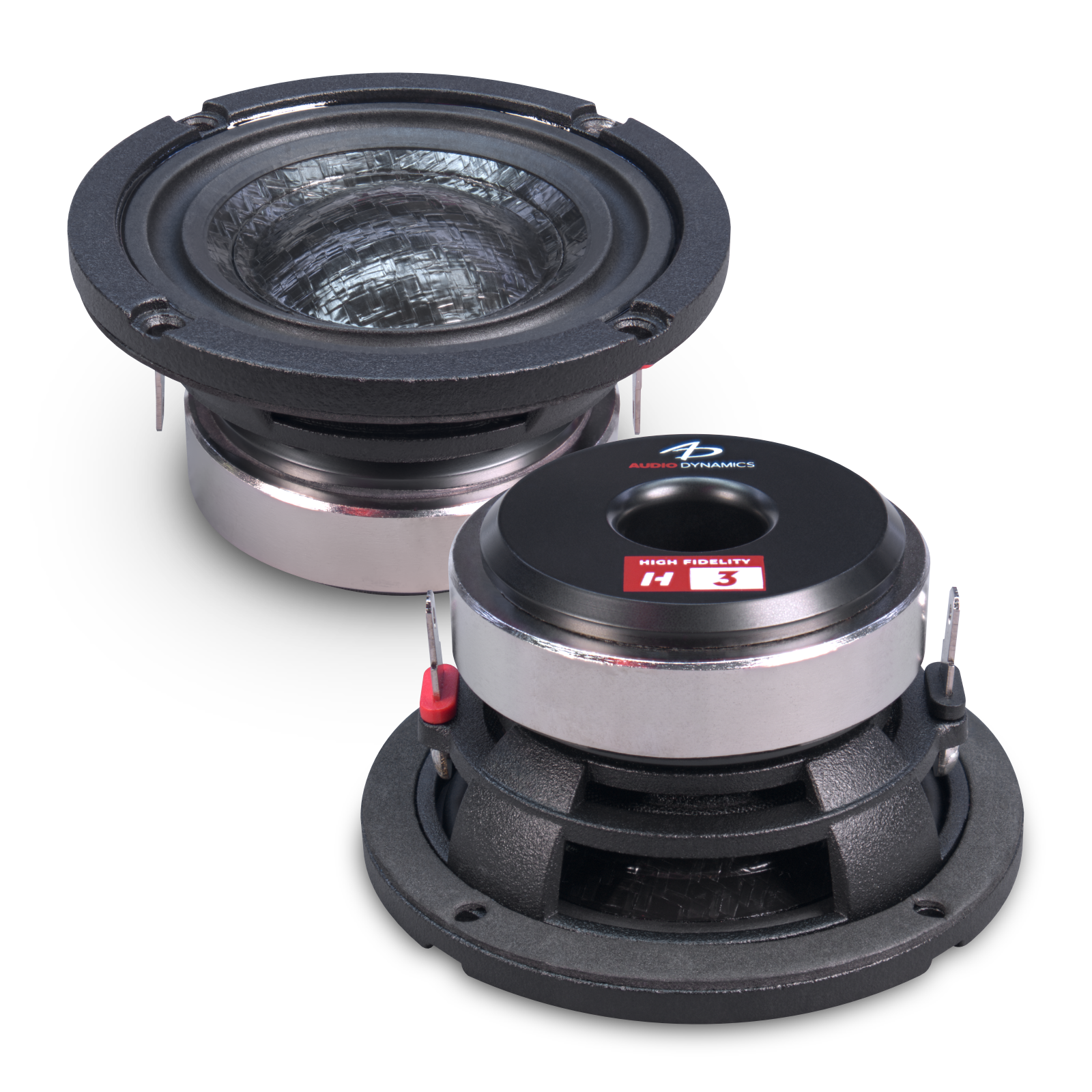
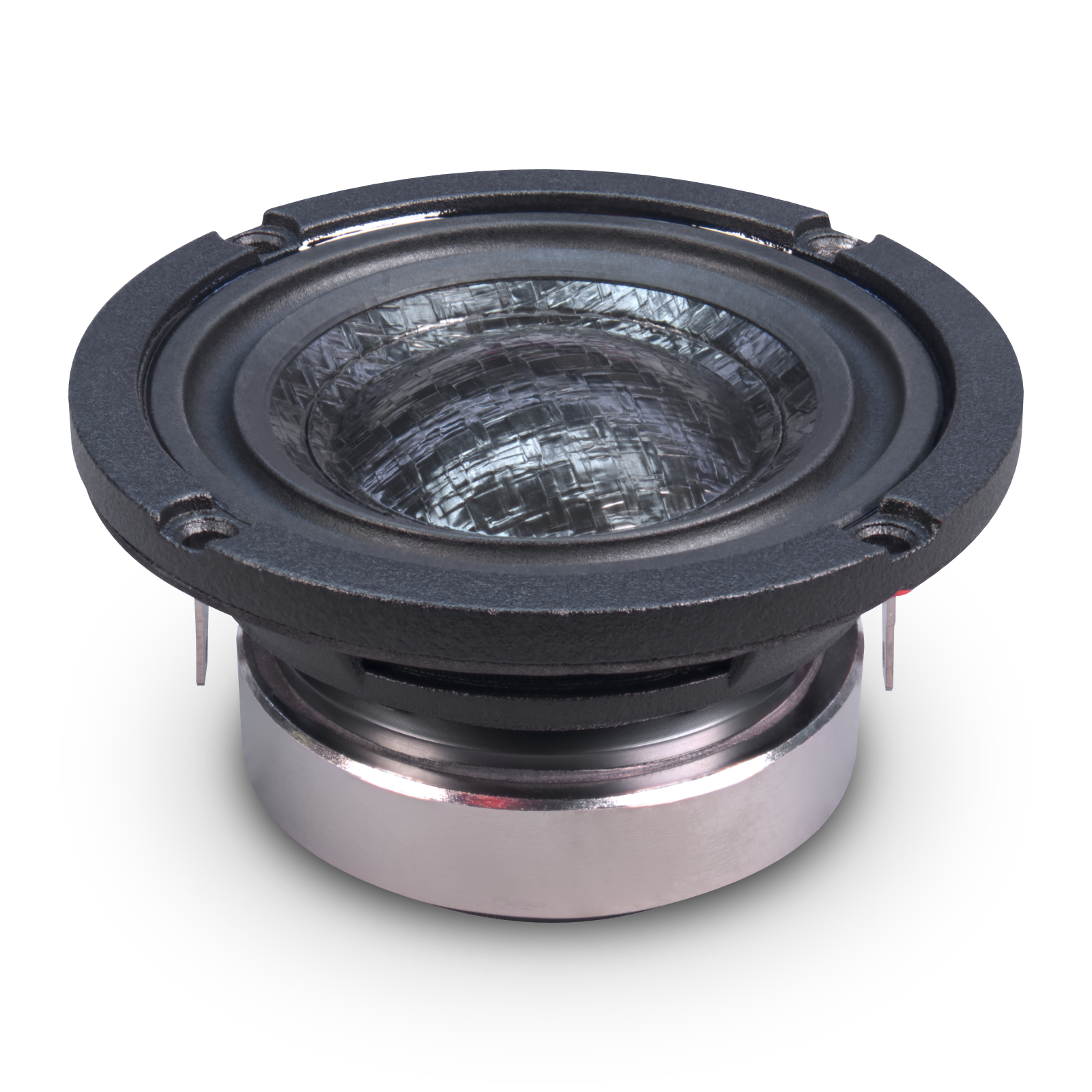
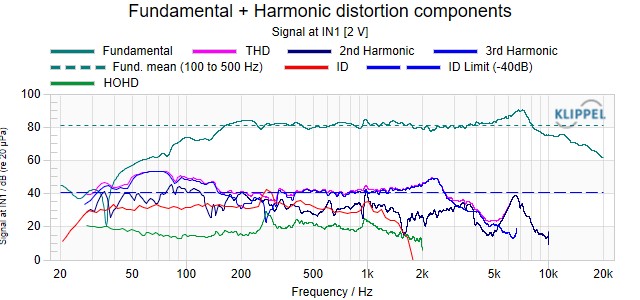
The High Fidelity H3 midrange is a high stroke, low distortion wideband midrange. This midrange has high stroke, very wide bandwidth, and high power handling. It features a 31.8mm / 1.26” voice coil diameter for high power handling and motor force.
The H3 midrange features an optimized over hung coil design which provides ±2.5mm of linear excursion.
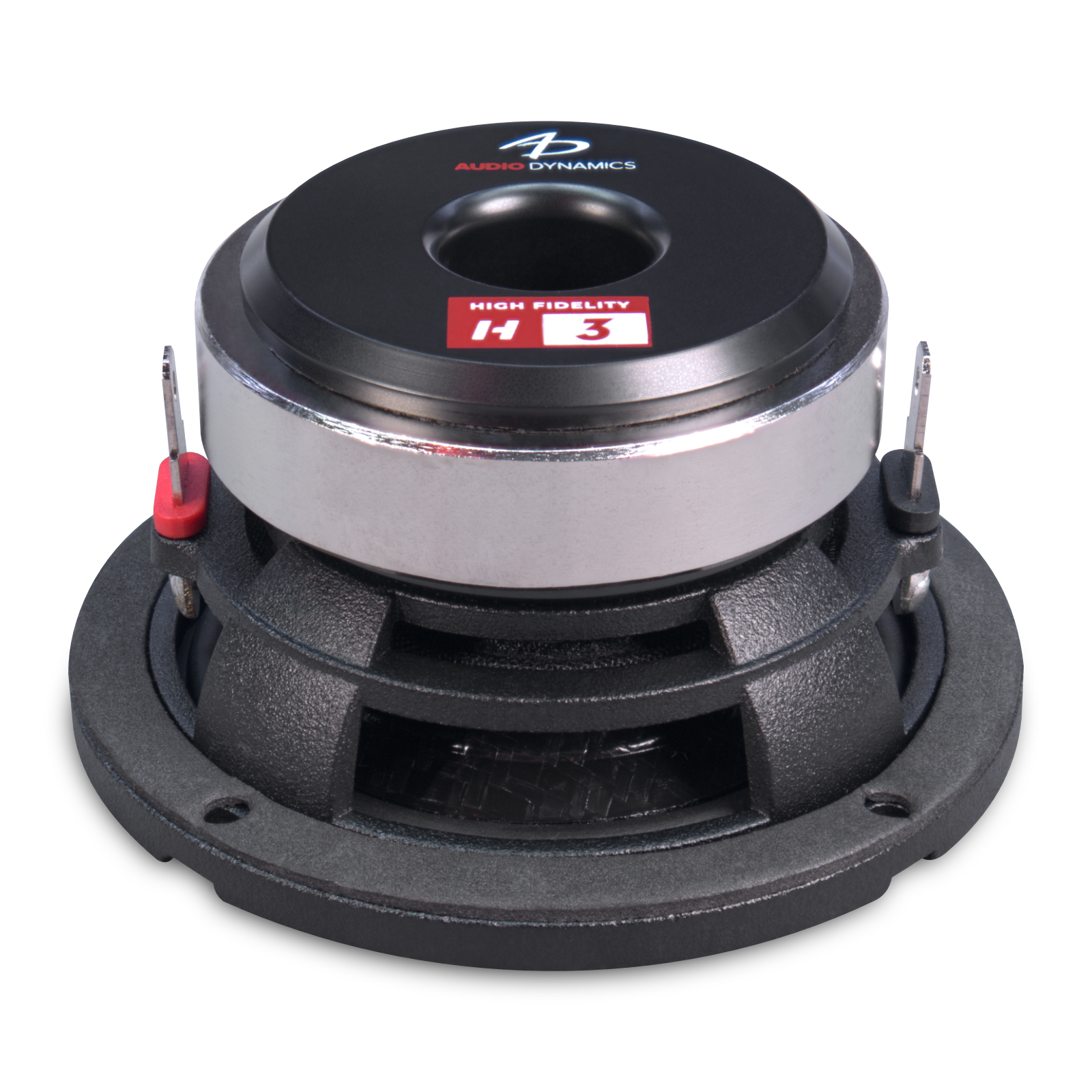
The H3 has integral shorting rings within its magnetic structure. These features result in exceptionally low inductance at all operational frequencies and across stroke. This further extends bandwidth as well as reduces motional inter-modulation distortion for a much more open and natural midrange.
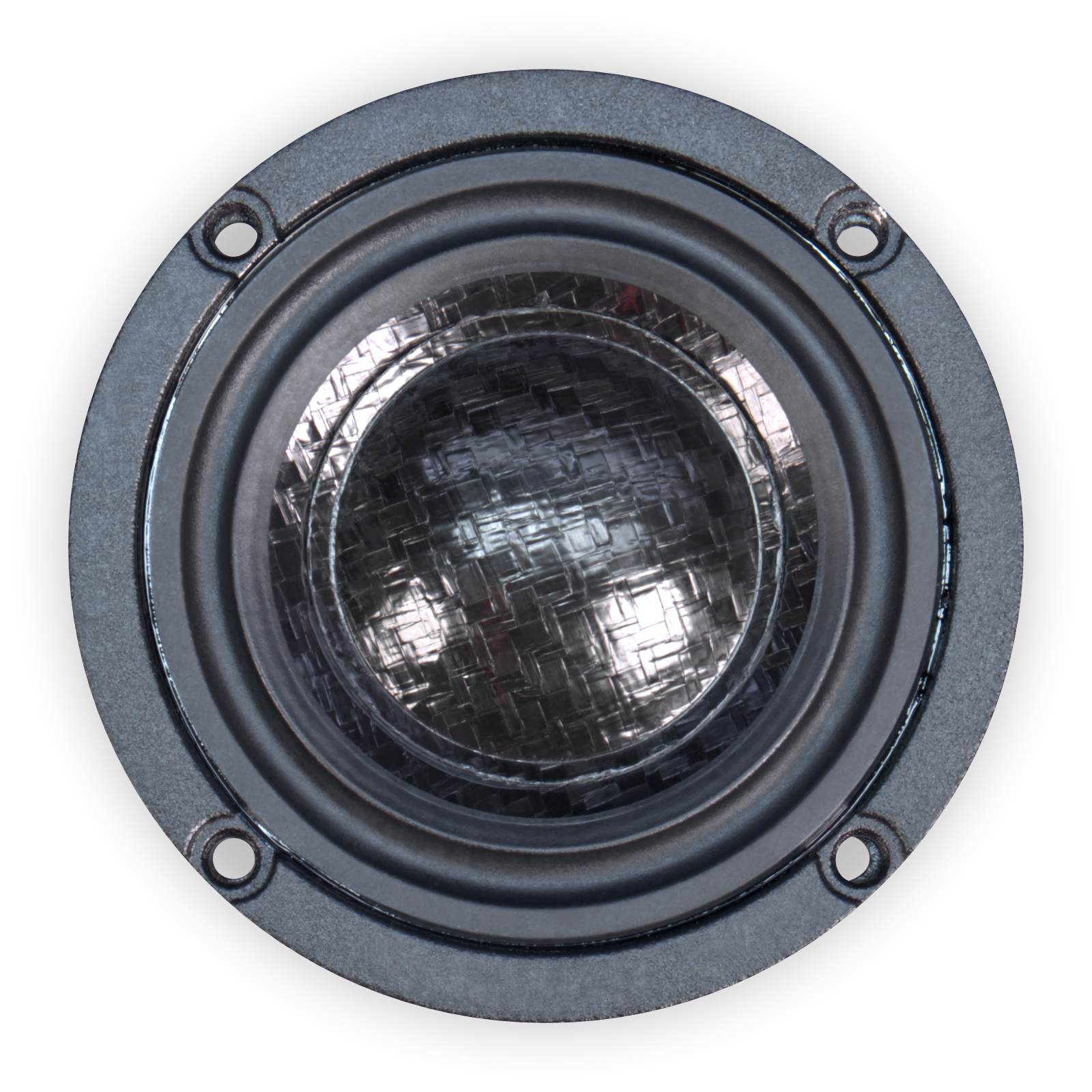
The H3 uses a woven strand-oriented polymer thermo-set cone. This cone features very high strength due to the strand orientation of the polyolefin monomer chains, and exceptional internal damping from the polyolefin itself. The thermal fusing ensures an air-tight surface without degrading the woven feature and strand orientation. The result is a cone with great tensile strength, vastly superior internal damping as compared to carbon and glass fibers.
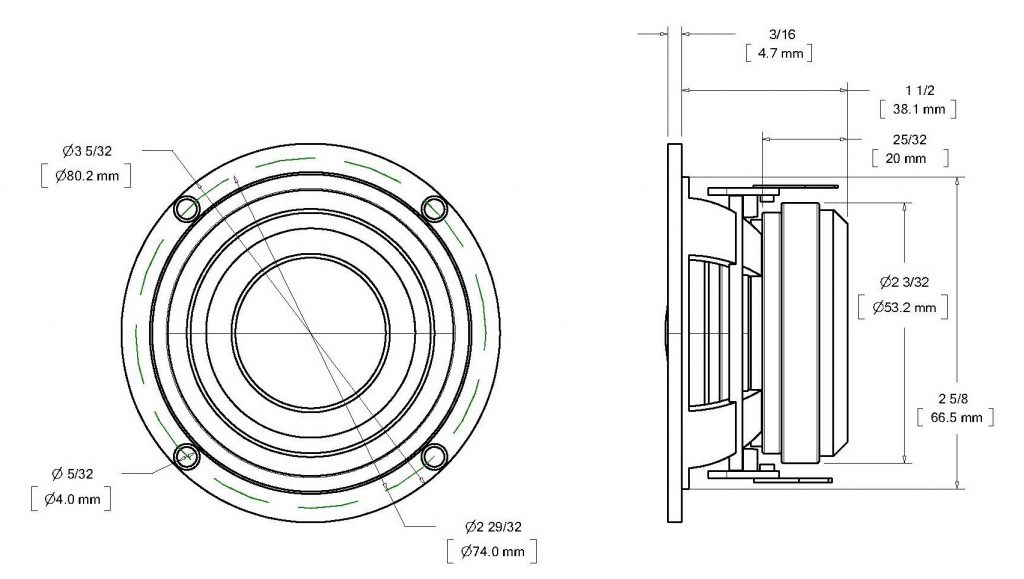
The H3 features a custom tooled basket, surround, cone, and spider which results in a very shallow mounting depth so the midrange can be placed as high as possible within a vehicle, to raise the stereo image up near the head of the listener.
Crossover Frequency and power handling
The H3 midrange is a wideband speaker. A low pass filter for blending with a tweeter would be dependent upon the tweeter and location of tweeter and the H3. As the H3 naturally rolls off above 12 kHz, it can often be used as a near-full-range speaker without a low pass filter applied.
The following table summarizes general guidelines for a high pass filter for use with the H3. As noted above, this is not a hard-and-fast set of limits, and the final installation needs to be considered when setting actual crossover values and gains.
| Power | 6dB/Oct | 12dB/Oct | 18dB/Oct | 24dB/Oct |
| 50W | 400 Hz | 330 Hz | 300 Hz | 280 Hz |
| 100W | 700 Hz | 400 Hz | 350 Hz | 325 Hz |
| 200W | 800 Hz | 500 Hz | 450 Hz | 400 Hz |
Note that with lower power applications, these frequencies may be adjusted down; with higher power, you may need to adjust the frequencies up. Again, the actual implementation of the entire system needs to be considered when installing these products. A small sealed chamber behind the midrange can increase mechanical power handling, but may negatively impact thermal power handling.
Thiele Small Parameters
| Nominal Impedance | 4 Ohms |
| Nominal SPL | 82.96 dB @ 1W, 1m (86.76 dB @ 2.83Vrms, 1m) |
| Resonant Frequency (Fs) | 194 Hz ±10% |
| Total System Q (Qts) | 0.779±15% |
| Equivalent Volume Air (Vas) | 0.162 liters ±15% |
| Motor Force (BL) | 3.938 N/A ±10% |
| Inductance at 1 kHz (Le) | 0.09 mH ±5% |
| DC Resistance (DCR) | 3.35 Ohms ±5% |
| Moving Mass (Mms) | 3.579 grams ±10% |
| Electrical Q (Qes) | 0.942 ±10% |
| Mechanical Q (Qms) | 4.5 ±15% |
| Diaphragm Surface Area (Sd) | 24.59 cm²±2% |
| Linear Excursion (Xmax) | 2.5mm one way ±5% |