
Description
Overview
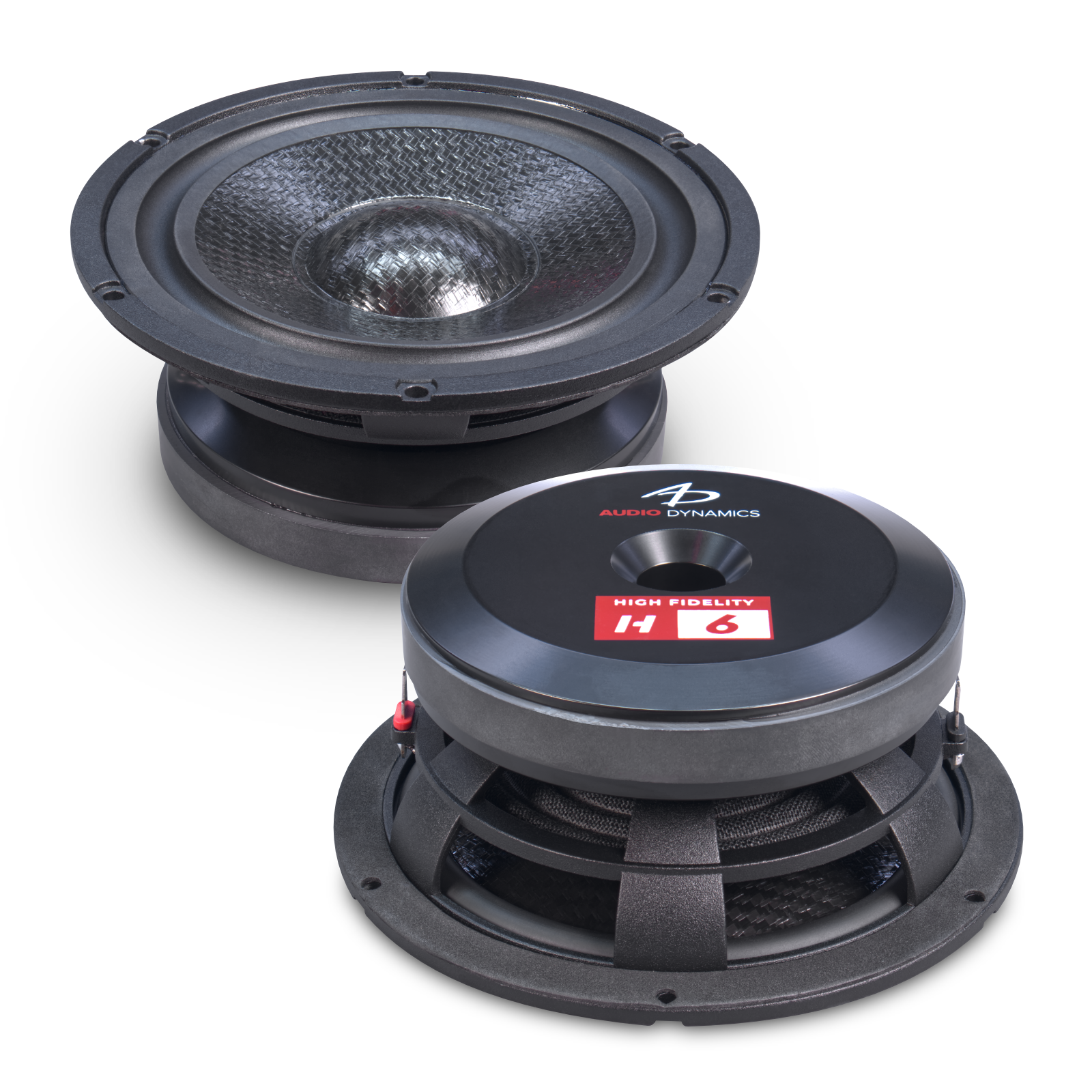
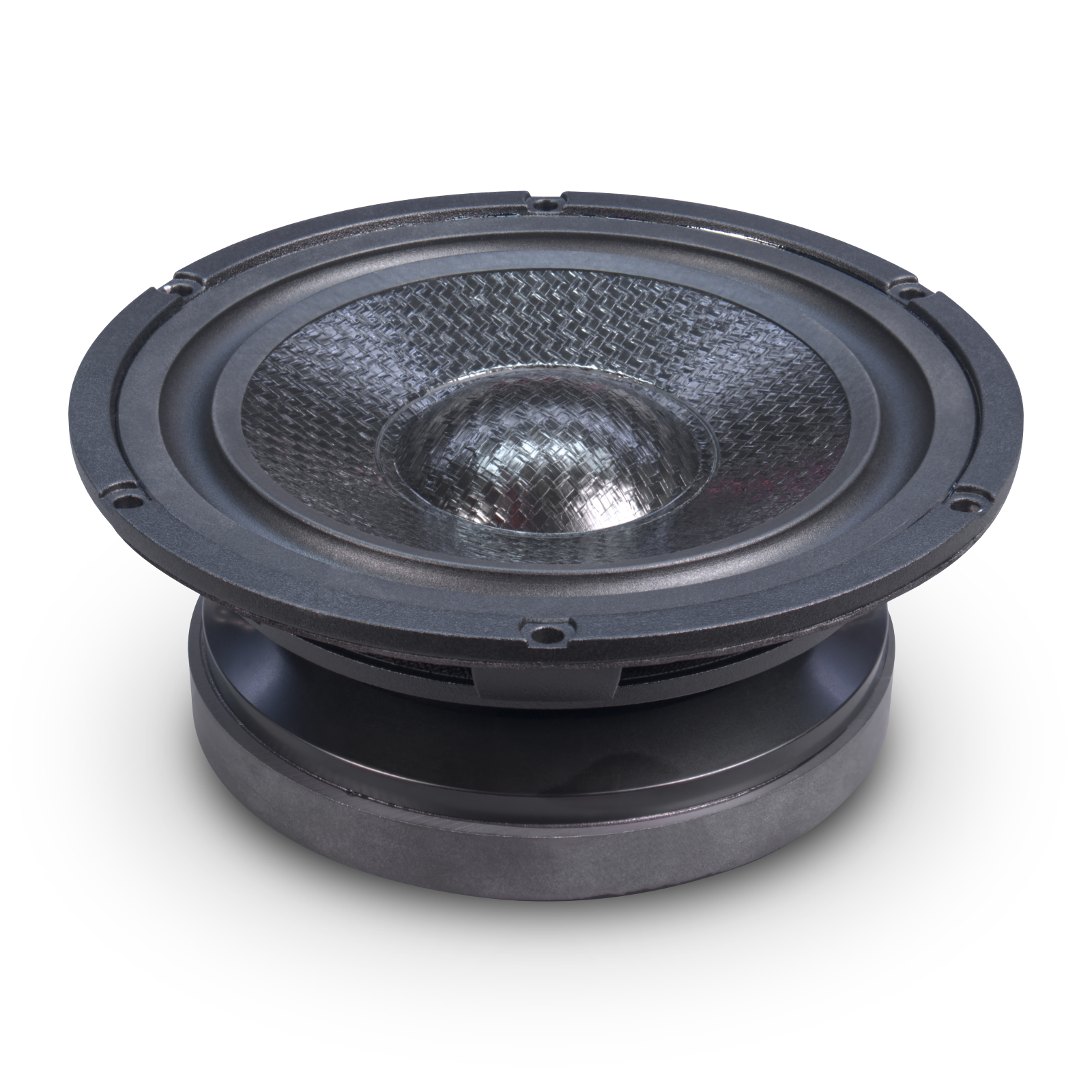
The High Fidelity H6 mid-woofer is a high stroke, low distortion high output mid-woofer. This speaker features high stroke, low distortion, wide bandwidth, and high power handling. It features a 44.4mm / 1.75” voice coil diameter for high power handling and motor force.
The H6 mid-woofer features a split-gap design which provides ±6.5mm of linear excursion, allowing for displacement equal to many 8 inch mid-bass. The high linear stroke features a flat BL curve for exceptional dynamics and impact.
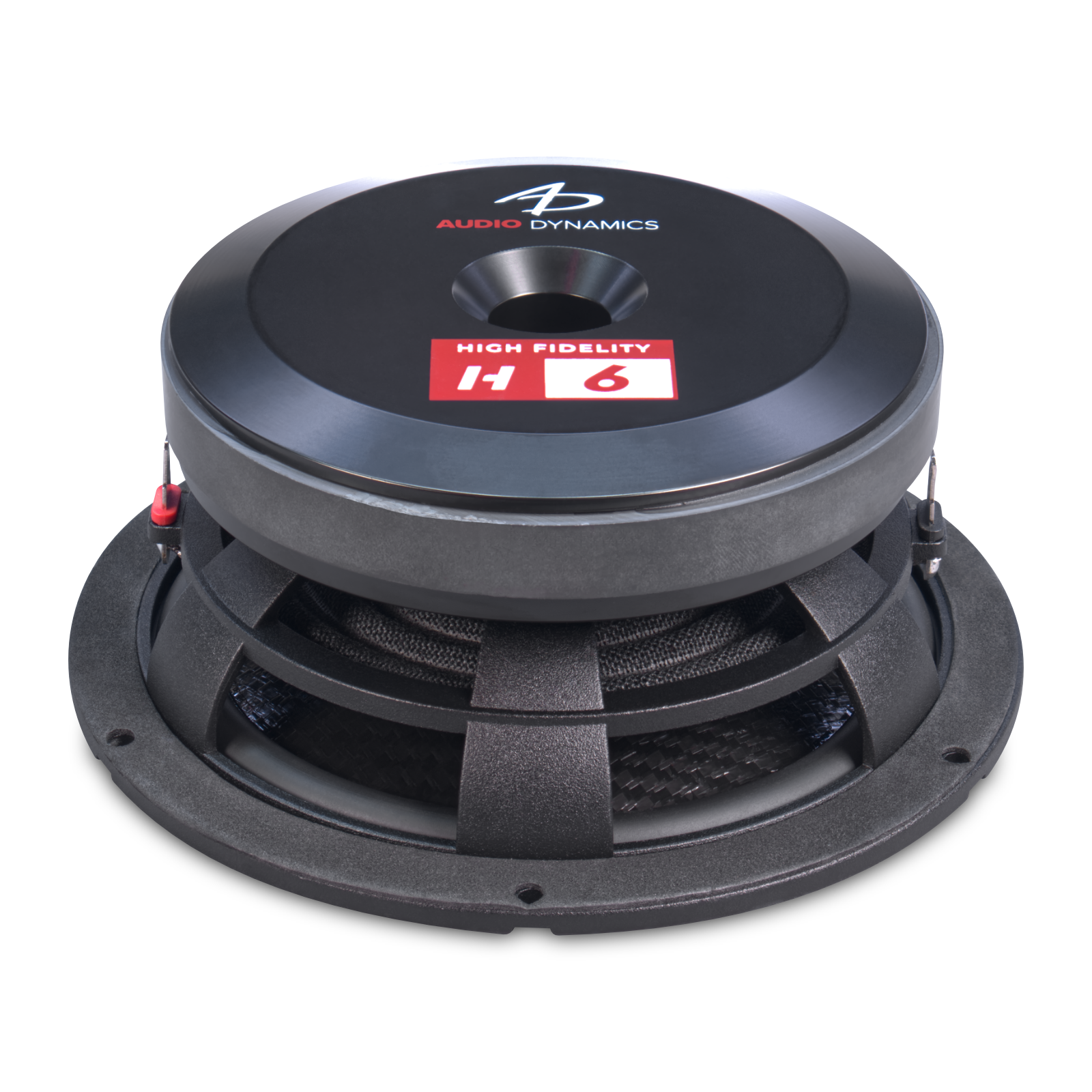
The H6 has integral shorting rings within its magnetic structure. This feature results in exceptionally low inductance at all operational frequencies and across stroke. This reduces motional intermodulation distortion for a much more open and natural midrange.
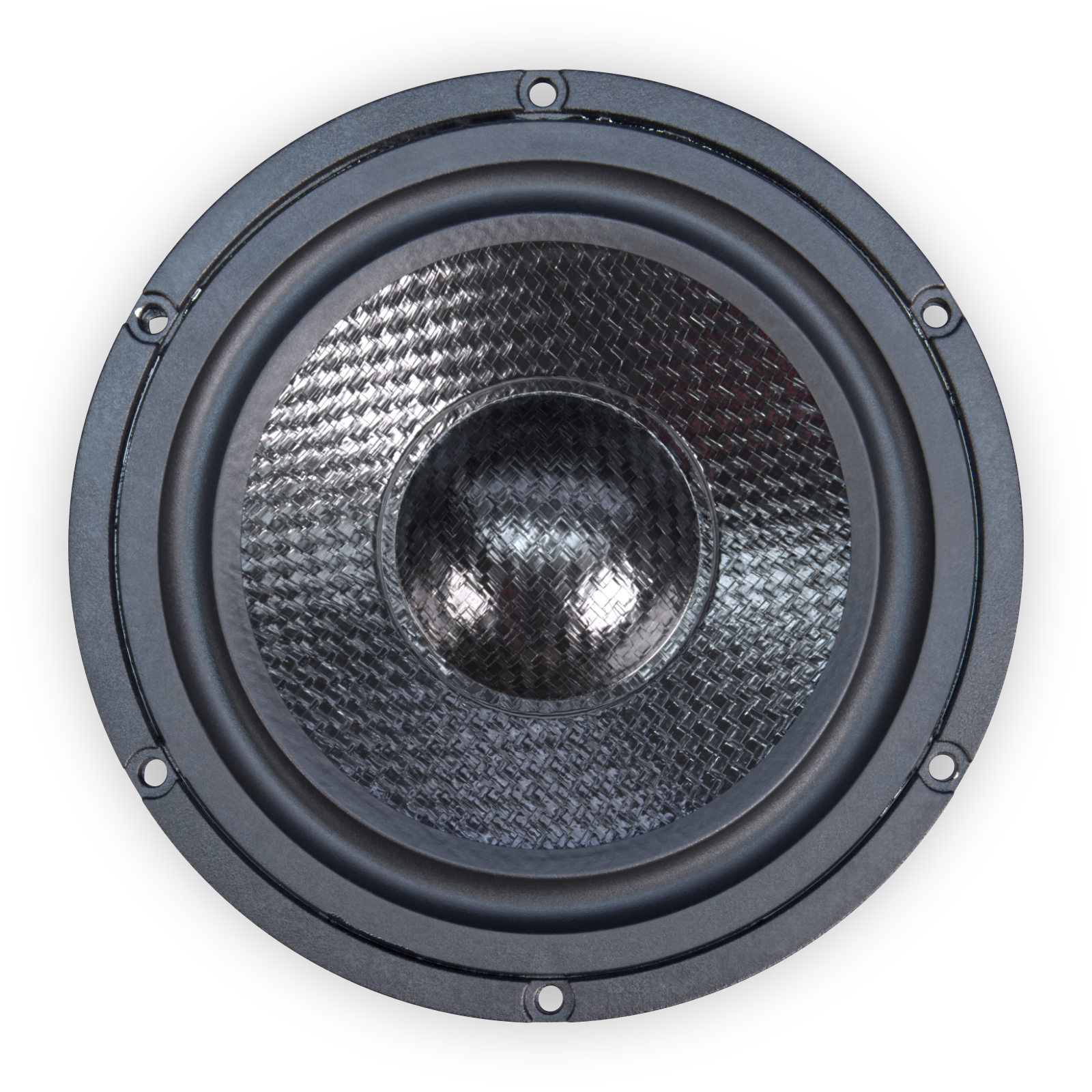
The H6 uses a woven strand-oriented polymer thermo-set cone for superior damping. The thermal fusing ensures an air-tight surface without degrading the woven feature and strand orientation. The result is a cone with over 600 MPa of tensile strength, vastly superior internal damping as compared to carbon and glass fibers, and a density of just 0.9 g/cm3 , approximately 40% that of carbon fiber.
The H6 uses a shallow split gap motor structure and custom tooled basket, surround, cone, and spider result in a very shallow mounting depth so the mid-woofer can fit into shallow locations, enabling creative positioning for best acoustical performance.
Crossover Frequency and power handling
The H6 mid-woofer is a wide bandwidth, high stroke speaker. A low pass crossover should be set no higher than 3000 Hz. The actual value should be selected based upon the paired tweeter, midrange, or full-range speaker.
The bottom end is robust, and can often forego a subsonic filter. The following table summarizes general guidelines about a subsonic filter. As noted above, this is not a hard-and-fast set of limits, and the final installation needs to be considered when setting actual crossover values and gains.
| Power | 6dB/Oct | 12dB/Oct | 18dB/Oct | 24dB/Oct |
| 50W | Not necessary | Not necessary | Not necessary | Not necessary |
| 100W | Not recommended | 60 Hz | 50 Hz | 45 Hz |
| 200W | Not recommended | 85 Hz | 75 Hz | 65 Hz |
| 300W | Not recommended | 110 Hz | 90 Hz | 80 Hz |
Note that with lower power applications, these frequencies may be adjusted down; with higher power, you may need to adjust the frequencies up. Again, the actual implementation of the entire system needs to be considered when installing these products. A small sealed chamber behind the midrange can increase mechanical power handling, but may negatively impact thermal power handling.
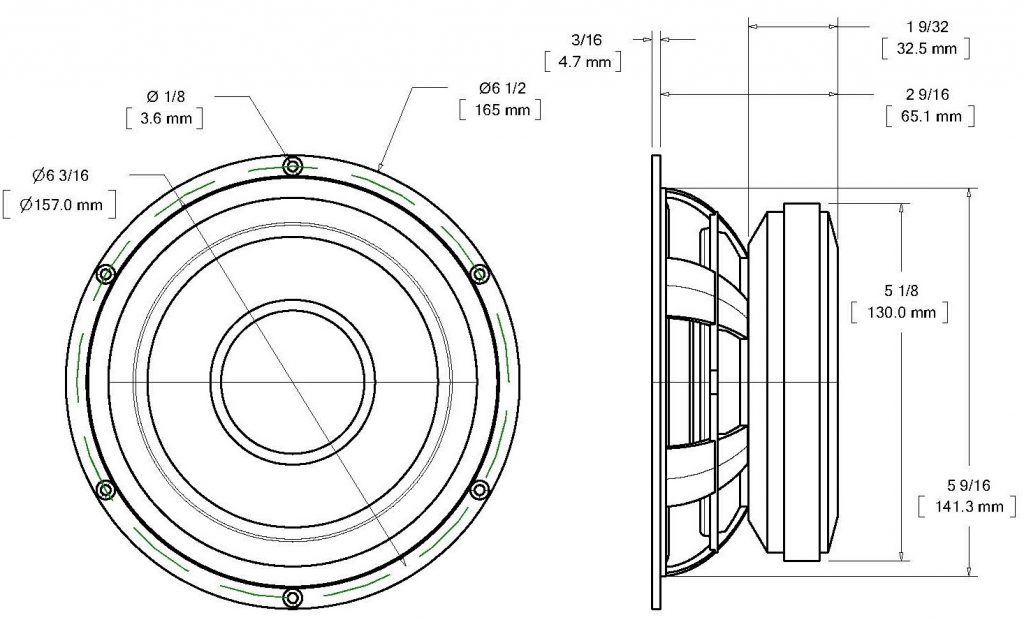
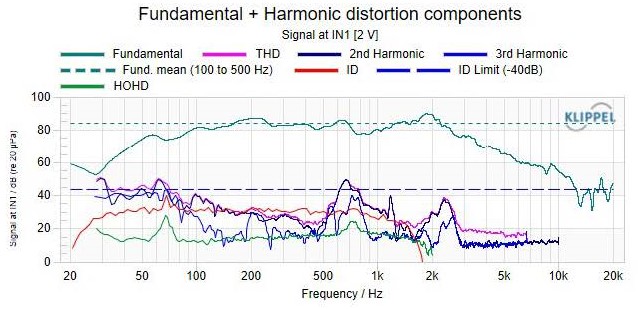
Thiele Small Parameters
| Nominal Impedance | 4 Ohms |
| Nominal SPL | 85.61 dB @ 1W, 1m (89.54 dB @ 2.83Vrms, 1m) |
| Resonant Frequency (Fs) | 50 Hz ±10% |
| Total System Q (Qts) | 0.398 ±15% |
| Equivalent Volume Air (Vas) | 8.142 liters ±15% |
| Motor Force (BL) | 7.814 N/A ±10% |
| Inductance at 1 kHz (Le) | 0.327 mH ±5% |
| DC Resistance (DCR) | 3.24 Ohms ±5% |
| Moving Mass (Mms) | 26.51 grams ±10% |
| Electrical Q (Qes) | 0.442 ±10% |
| Mechanical Q (Qms) | 4.046 ±15% |
| Diaphragm Surface Area (Sd) | 122.5 cm²±2% |
| Linear Excursion (Xmax) | 6.5mm one way ±5% |